1 Comment

Chinese Moon Cakes in Sunset Park

Moon Cakes

Moon Cakes

The other day I posted about the Chinese Mid-Autumn Festival known as Zhōngqiū Jié which ends tomorrow, September 19th. It celebrates the harvest season and the full moon. The customary gift is known as the moon cake. Because of it’s ubiquity during the season it’s hated by many. Some view it like the fruit cake – something never to be eaten, only to be re-gifted. Others don’t like the taste, despite efforts to make it more popular.

Reading about the strong reactions made me curious to try a few. It’s only about a 40 minute walk from home to the Brooklyn Chinatown in Sunset Park which on a cool night is very doable. The area hosts scores of bakeries, most of which had tables setup in front with people hawking pre-boxed mooncakes made locally. Prices range from $15-$40 depending on size and filling. Other boxes made in China were available at corner delis for as low as $8.

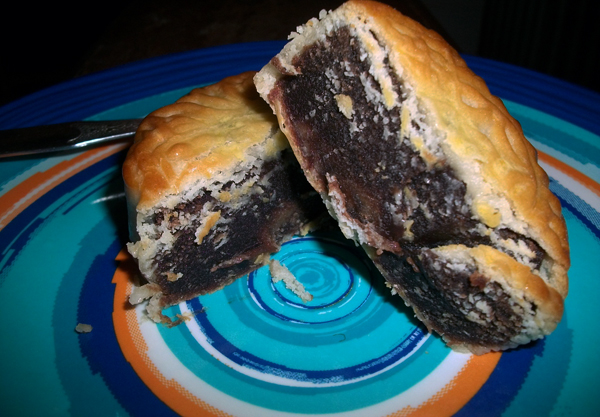
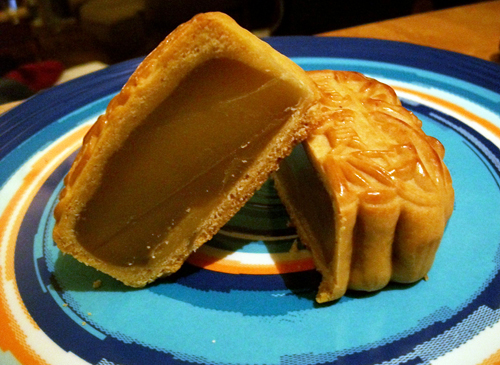
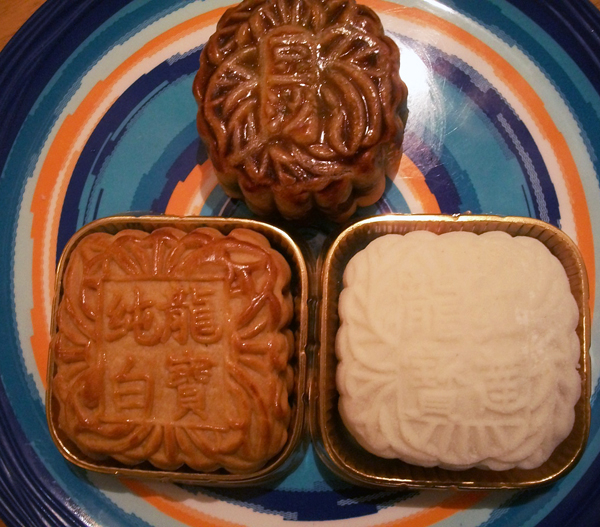
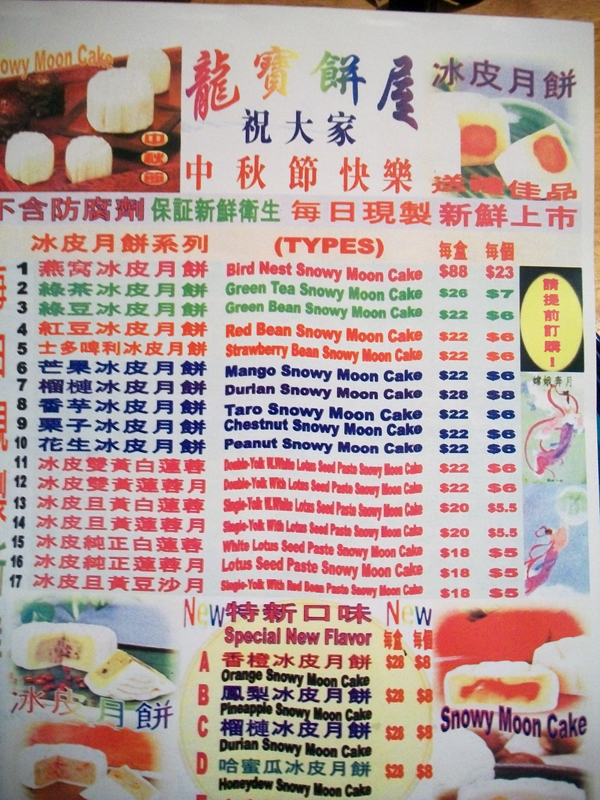
I purchased a red bean mooncake at HFB bakery which was sweet and very rich. Because of language barrier I wasn’t able to find one of the traditional flavors, lotus seed paste until I hit Dragon Bay Bakery. They had the brilliant idea of a moon cake menu with prices in English and Chinese. Here I picked up a regular and a snowy mooncake both with lotus seed paste. The latter is made with rice flour. The lotus has an interesting sesame meets peanut butter flavor and pairs excellent with black tea.

HFB Bakery
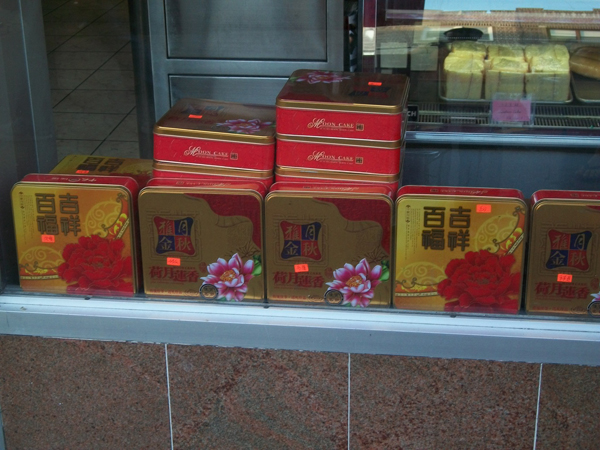
HFB Bakery

Mooning the Window

Mooning the Window

Red Bean Moon Cake
Red Bean Moon Cake

Moon Cake Menu

Moon Cake Menu

Lotus Seed Paste!

Lotus Seed Paste!

Since I didn’t grow up with receiving moon cakes, I enjoyed this seasonal treat. If I have another opportunity to try moon cakes next year I’ll be adventurous and eat the watermelon and egg yolk flavor or even Durian. Anyone tried those flavors before?

The festival ends on September 19th so check them out now!

2 Comments

Chinese Style Eggplant Recipe Via Serious Eats

Chinese Eggplant Recipe

Chinese Eggplant Recipe

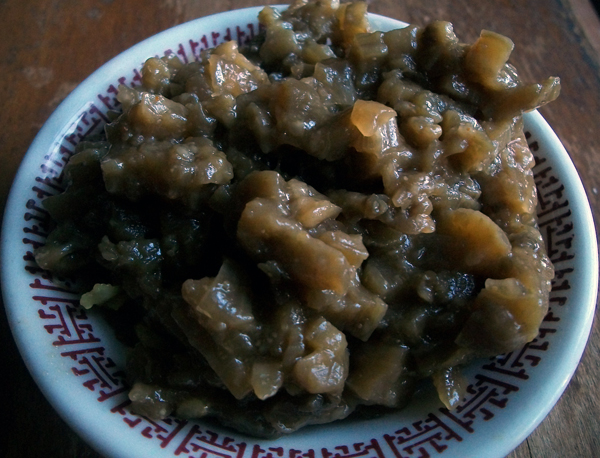
Other than stir-fries, I don’t make much Chinese food at homes. With recipes like this one from Serious Eats, it feels much more accessible. This is the best Chinese-style eggplant recipe you’ll see today. Tamari, cooking wine, honey, chili and vinegar all do their part to give it a rich taste. Since we didn’t have rice wine on hand we used cooking wine instead, skipped the grilling and diced the eggplant nice and small. The dish works as a great contrast to the nuttiness of brown rice.  Alongside the eggplant we had green beans and tofu. What are some of your favorite Chinese dishes to make at home?

Note: For those with restrictions, this recipe is already vegan and substituting tamari for soy makes it gluten free.

3 Comments

Pomegranate and Walnut Tofu (Fesenjen)

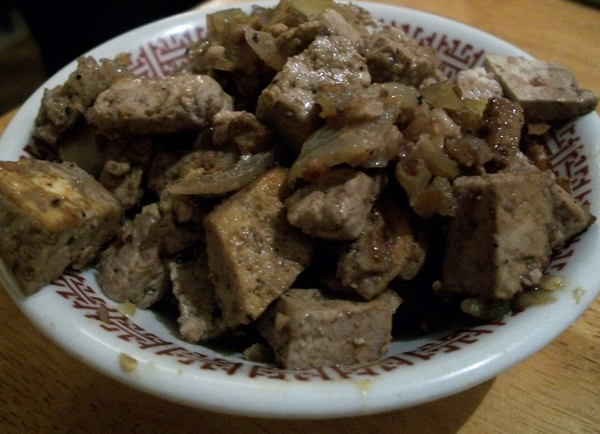
Tofu Fesenjan (Pomegrante and Walnut Stew)

Tofu Fesenjan (Pomegrante and Walnut Stew)

Back in June I posted about fesenjan, a tangy Persian pomegranate and walnut dish from Louisa Shafia’s book New Persian Kitchen. Normally made with chicken (or lamb) here is a  vegan version. The recipe is similar to the meat one, but it cooks the flavor right into the protein so it’s more like a pomegranate and walnut flavored tofu. Note that if you cannot find pomegranate molasses in your area, here a link to making your own.

Servings: 3
Prep Time: 10 minutes
Cook Time: 20 minutes
Ingredients:
1 lb (16oz) Extra Firm Tofu
½ onion chopped into strips
½ cup walnuts, crushed into powder
¼ cup pomegranate molasses

Method:
Squeeze out as much water as possible from the tofu while maintaining the shape. A way to do this is to place the tofu between 2 plates. Then chop tofu into cubes (sized to your liking). Next place tofu and onions into a pan. Turn the pan on to medium heat. Cook for 5-7 minutes, making sure the tofu browns a little on each side. Now stir in walnuts and molasses. Mix in well. Cook for another 5 minutes. If the tang from the molasses is too strong, add a little water to thin it out.

5 Comments

It’s Moon Cake Time! Happy Mid-Autumn Festival.

When was the last time you presented someone with a fruitcake? It’s Zhōngqiū Jié, the Mid-Autumn Harvest festival in China. This year, the official date of the holiday is September 19th. The date changes but is always during the 8th month on the 15th day on the Chinese calendar when there is a full moon. This typically falls close to the autumnal equinox.

One of the quintessential foods given as a gift during this time is the moon cake. The pastries are circular, about 4 inches in diameter and about 1.5 inches thick. Classic fillings include lotus seed or red bean paste, and duck egg. They’re often cut into small slices and shared. The texture is dense and a little sweet.

If you live near a Chinatown, now through September 19th is the time to pick one up or a box of them (sold in packs of 4). This traditional sweet is given as a gift to friends, relatives and business relations. These days, many in China view Moon cakes as akin to fruitcakes. That is to say, the gift is received, not opened and quickly re-gifted. Lately the moon cakes have become somewhat controversial. The boxes given as gift to business associates are sometimes made of gold for example so China is attempting to crack down. Waste is another issue where in Hong Kong alone 2 million moon cakes were thrown out last year.

While it’s considered by some as the fruitcake of China, I found the flavor to be enjoyable but had to eat it over the course of several sittings with tea. In New York, you can find them in Manhattan, Brooklyn and Queens Chinatowns.

3 Comments

Natural Food Dyes: Purple Sweet Potatoes Are In? Artificials Out…….Someday

Image Source: NPR

Synthetic dyes are pervasive in all kinds of food. Crazy hued yogurts? Frosting on a cake? While there isn’t much evidence to prove these dyes are harmful, more and more consumers are on the lookout for natural food coloring.

Of course as we learned last year, natural alone doesn’t mean acceptable, when Starbucks was outed for using a red dye made from the cochineal bug in their strawberry frappuchinos (they stopped after word spread).

While it’s currently cost prohibitive, food scientists like Steve Talcott are looking into extracting color from purple sweet potatoes. At the moment, the dye would cost $136/pound, but if there is enough demand the price with decrease.

How much better would you feel knowing your crazy looking yogurt is colored by the humble sweet potato?

Source: NPR


5 Comments

Food Waste: Third Largest Source of Greenhouse Gases According to U.N

 Behind Chinese and U.S industry, food waste is the 3rd largest source of carbon dioxide emissions. Based on a study by the U.N Food and Agriculture Organization, 1.3 billion tons of food per year is trashed leading to 3.3 billion tons of CO2 emissions. The “Food Wastage Footprint” report is the first to analyze the impact of uneaten food in a global context.

In the industrialized nations most of the blame for food ending up as garbage lies with consumers buying more than they actually need, while in the developing world it’s mostly lame agricultural techniques which result in the harvest not reaching the people.

Overall, 54 percent of total wastage is at the pre-processing stage, with potential food being lost during post-harvest handling and storage.  The remaining 46 percent is lost during processing, distribution or consumption.

The report concludes that reducing food waste would help to preserve natural resources and lower the 60% food production increase that is demanded for 2050 population projections. Source: Reuters

Leave a comment

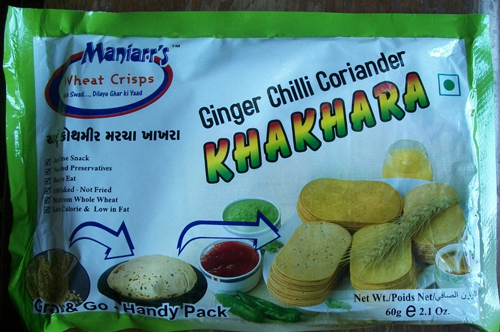
Snack Reviews: Maniar’s Wheat Crisps (Ginger Chili Coriander Khakhra)

Maniar's Wheat Crisps

Maniar’s Wheat Crisps

Khakhra are a crisp/cracker originating from the state of Gujarat, India. Generally they are made with wheat and various spices. Sometimes other flours are incorporated such as black millet (bajri). They’re often eaten as a snack or for breakfast. The dough is created, flattened and then slow roasted.

Most khakra are circular so the Maniar’s packaging was eye-catching for it’s unusual long and rounded edges. It is delightfully labeled as Grab and Go – Handy Pack. In other words, don’t leave home without it. It also states that it’s baked, not fried, whole wheat and low fat. It’s also worth noting that they are vegan/vegetarian.

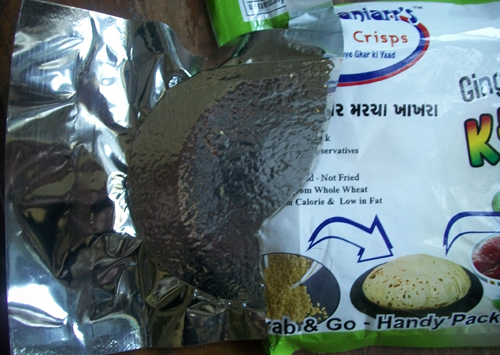
Vacuum-sealed because they care.

Vacuum-sealed because they care.

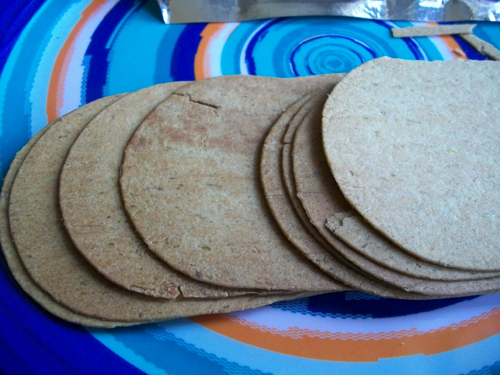
Crispy Goodness

Crispy Goodness

These were picked up at Patel Brother’s in Atlanta for $0.33!  Inside, the package was vacuum sealed, presumably because they care. Tasted alone, the wheat flavor is strong, and the crunch moderate. A moment later, the chili and ginger come through in a pleasant way. They’re nice paired with tea but I found them most enjoyable eaten with salsa. (In India, they’re commonly eaten with pickle or chutney). It also works well with dal. Since the packs were 3/$1, I also picked up chocolate and lemon & spicy! (To be eaten later). I’ll definitely get this brand again but will make sure to have a relish of some type to go with it.

If you can’t find this type of food in your area here is a link to a recipe from Tarla Dalal to make at home.

Leave a comment

Collard Greens Recipe, semi-Kashmiri style

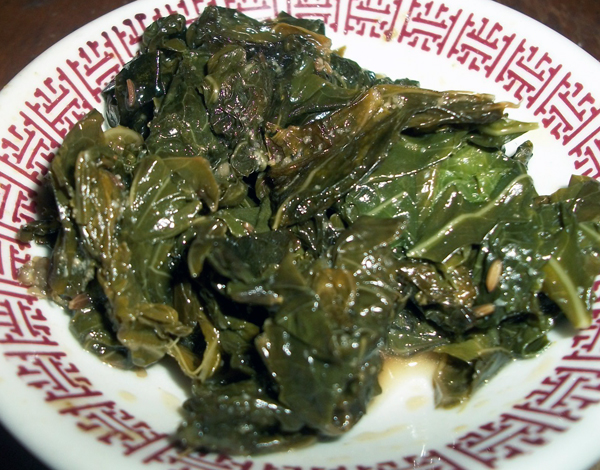
Mean, mean haak collard greens

Mean, mean haak collard greens

Most Americans know collard greens in the U.S as the preeminent leafy green of soul food. With copious usage of ham products involved, it’s guaranteed to be tasty. After a few days of the traditional, I had some leaves leftover for a new experiment. This is a milder version of the traditional Kashmiri recipe known as haak where it’s made with very spicy chilies and lots of mustard oil. The recipe is vegan and gluten free naturally.

Prep Time: 5 minutes
Cook Time:
Ingredients:
1 pd collard greens, stems removed, chopped as you like
2 T mustard oil
1 T cumin seeds
1 T garlic powder
salt to taste
chili powder or chili peppers to taste
½ cup water

Method:
Heat the mustard oil in a pan on medium. Add in cumin and chilies if desired and allow to sputter for a minute or so. Next add in all other ingredients. Mix well. Cook covered for about 10-15 minutes, stirring occasionally. Check on greens and add a little more water if needed. They should darken in color, be tender to taste and have a little kick.

2 Comments

Taro Root Recipe (This One Needs a Bit of Help)

Taro Root - Home Fries Style

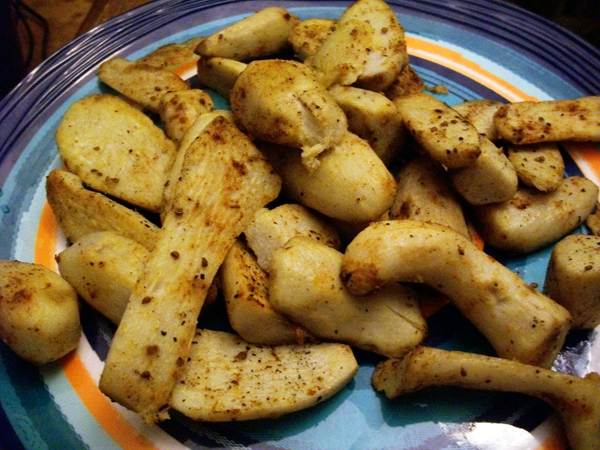
Taro Root – Home Fries Style

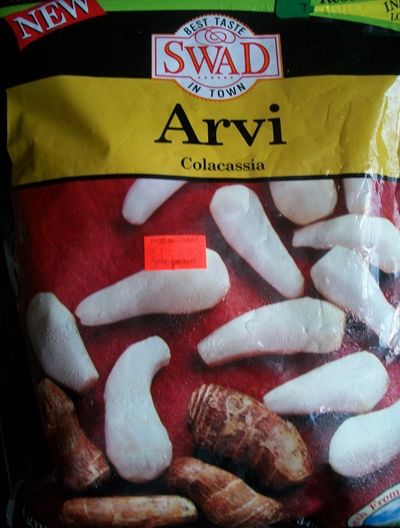
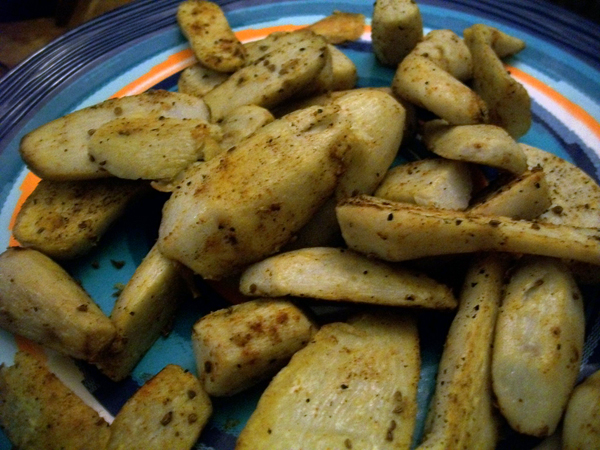
I was inspired to pick up a pack of frozen taro root (aka colocassia aka arvi) at Patel Brother’s in Jackson heights after reading about it in the Sarah Vowell Book, Unfamiliar Fishes. Full Disclosure: Partly out of habit and partly from fear of the untasted, the taro laid dormant in my freezer for several months. Then the day came where I was out of my go to starches, potatoes and rice.

I decided to try the taro recipe found in India: The Cookbook by Pushpesh Pant which has over 1,000 recipes. It’s a great resource in general but the rule of thumb is to double the measurements of most spices. The recipe suggests ajwain (carom seed), chili powder and salt. First I boiled the taro for a couple of minutes. Then transferred them to a pan to fry up. After just the initial seasoning, it was missing something.

They taste, naturally like a cousin to a potato and almost exactly like yucca. It’s a pleasing, creamy flavor but could’ve been improved. In the pictures below you’ll see that paprika, garlic, salt and pepper were added a la home fries. This helped the final product but it needs work.  Next time I may opt to just fry them in the pan home fries style or as a mash potato alternative in a shepherd’s pie. Have you ever tried to make taro/coloccasia/arvi before? Any recipes to share?

Here is a tasty taro recipe you may want to check out over at Cooking with Sapana

Taro Packet

Taro Packet

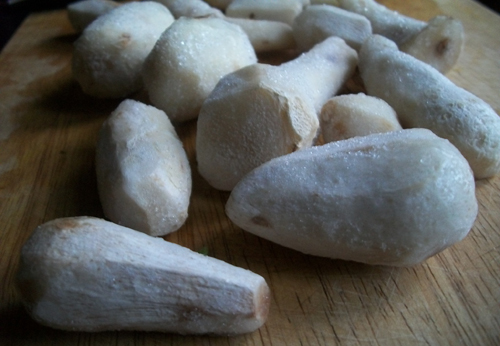
Taro - Very Frozen

Taro – Very Frozen

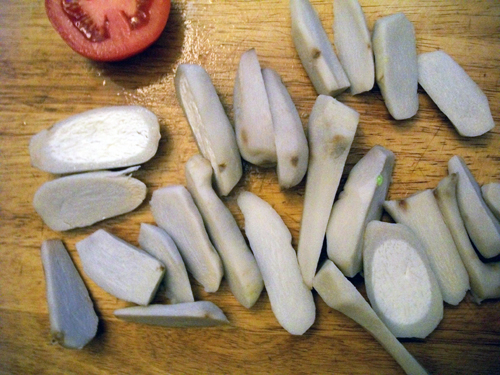
Taro Pieces Chopped

Taro Pieces Chopped

Taro Cooked

Taro Cooked

3 Comments

Cold Remedies From Around the World

Ugh. It’s the beginning of cold season and I am one of the latest victims. But relegation to the couch today won’t be so bad for several reasons: There are lots of NFL games on TV, and from the library I have DVDs of the Young Ones and Once Upon a Time in Mumbai at the ready.

Usually my go to cold remedy is hot and sour soup or the classic American chicken noodle soup with a grilled cheese. This short NPR story mentions a few cures for the common cold from China, Italy and India. In China, to prevent a cold, a soup made of mustard greens and sweet potatoes is served. It Italy, Lidia Bastianich cites an aunt’s tea made from bay leaves, sage, lemon and honey. And perhaps a bit more intense: Horseradish tea.

Vikram Sunderam, executive chef at the restaurant Rasika in Washington, D.C., relies on old “grandmother’s recipes.” His favorite go-to cold cure is a simple spoonful of ginger juice and honey. For kids, he recommends roasting ajwain, or carom seeds. “You inhale the aroma,” he says. “It’s similar to thyme.” Source: NPR

My cousin who is a doctor in the UK, suggests the Ayurvedic solution of milk with a pinch of turmeric.

What are your cold remedies?